
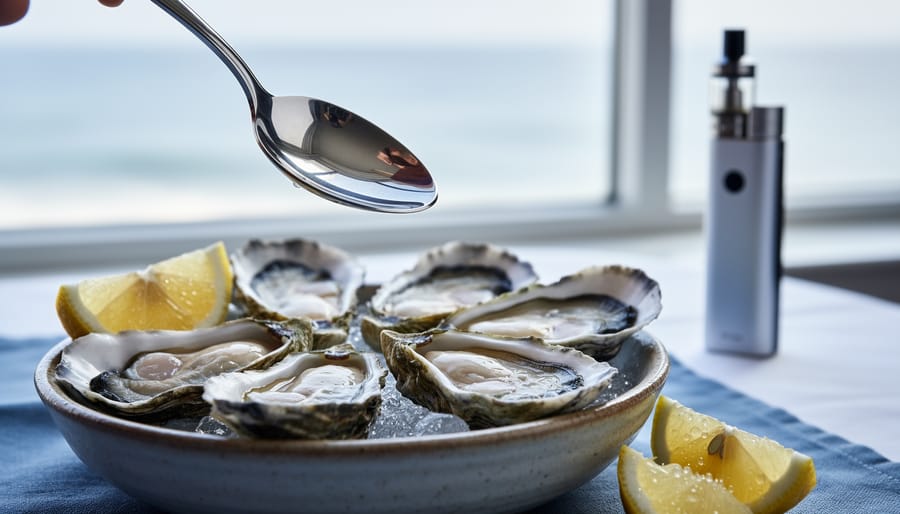
Vaping is the act of inhaling an aerosol, often sweetened or flavored, produced by heating a liquid in an electronic device. For anyone who cares about food, the real trouble starts after the exhale. Taste and smell work as a pair, and vaping can dull both, leaving the delicate flavors of a meal harder to find.
That matters most at the table. A sweet, glistening scallop, a clean wedge of lemon, the briny whisper of a just-opened oyster: these depend on a sharp, unclouded palate. We care about freshness, and we’ve learned that the best seafood asks for your full attention. It rewards a mouth and nose in good working order.
This article gives you three clear reasons vaping works against your sense of taste, explained in plain language with no lab-coat jargon and no unverifiable statistics. You’ll see how taste, smell, and vaping interact, why each reason affects the way you enjoy a meal, and what simple steps help protect the pleasure of eating. We’ll also answer the questions people ask most.
If you love good food, and especially food that comes from clean, responsibly harvested waters, your palate is worth protecting. Let’s start with how it all works.
How Your Sense of Taste Actually Works (and Where Vaping Gets Involved)
Taste Buds, Aroma, and the Partnership Behind Flavor
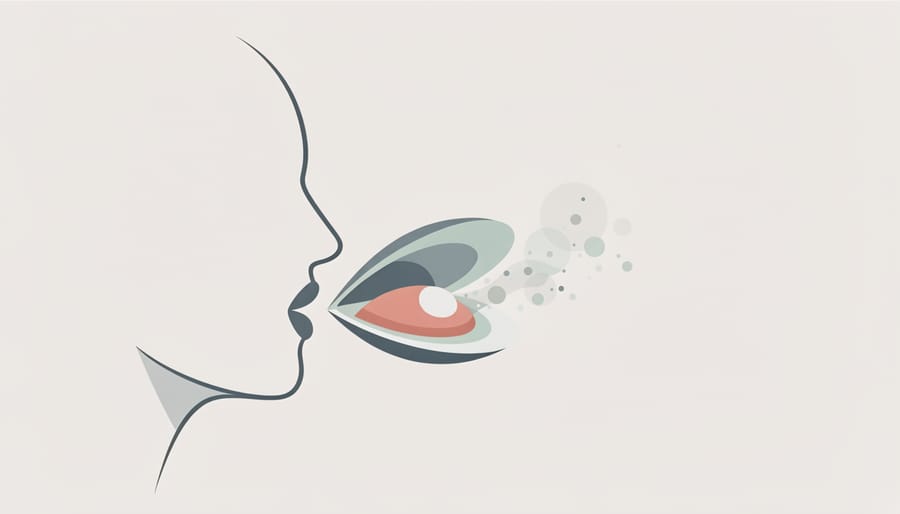
Think about biting into a fresh Dungeness crab leg. The sweetness hits your tongue first, but the full experience comes from something bigger: your tongue and your nose working as a team. Taste buds pick up the basics, while aromas travel up the back of your throat to your nose and fill in the rest. That’s why a briny oyster tastes like the ocean itself, and why a cold makes even your favorite chowder seem flat.
Here are a few terms worth knowing before we go further:
- Taste buds
- Tiny sensory clusters, mostly on your tongue, that detect sweet, salty, sour, bitter, and umami.
- Aroma (smell)
- Scent molecules picked up by your nose, both from outside and from food in your mouth.
- Flavor
- The combined impression of taste and aroma, which is what makes a dish memorable.
- Aerosol
- A fine mist of tiny droplets suspended in air, like the vapor a device produces.
- Palate
- Your overall ability to notice and appreciate flavors.
When both senses are working well, a simple seared scallop becomes a small celebration.
What Happens When You Vape
When you vape, a battery-powered device heats a liquid until it turns into a warm aerosol, which you draw into your mouth and then inhale. People often call it vapor, but it’s really a cloud of tiny droplets, and those droplets don’t politely stay in one spot.
First, the aerosol washes over your tongue and the inside of your cheeks, leaving a thin film behind. Then it moves down the throat and into the airways. Some of it also drifts up behind the palate and out through your nose, the same route a lovely aroma takes when you lift a spoonful of chowder to your lips.
That’s the key point. Your taste buds and your sense of smell sit right along the path of every puff. Both get coated, warmed, and exposed again and again, often many times a day. Before we look at each reason in detail, it helps to remember that these two senses are doing delicate work, and the aerosol passes straight through both.
Reason One: Vaping Can Dull Your Taste Buds
Your tongue is covered in taste buds, and each one is built to pick up the five basic tastes: sweet, salty, sour, bitter, and umami. Vaping puts that system under strain. Each puff leaves a thin, sticky film across the tongue and a drying effect in the mouth, and saliva is what carries flavor molecules to your taste buds in the first place. When the mouth stays dry, those flavors have a harder time registering.
Research on vaping specifically is still developing, so it’s too early to make sweeping promises about the long term. There’s older evidence on a related habit, though: studies suggest cigarette smoke lowers taste sensitivity which hints at why inhaled irritants deserve caution. Many people also notice the effect in daily life, long before any lab would measure it.
Here are some everyday signs your taste may be dulled:
- Food seems bland, even when it’s well prepared.
- You keep reaching for extra salt or seasoning.
- The nuance in delicate dishes goes missing.
- Your mouth feels persistently dry.
This matters most with the foods that whisper rather than shout. Premium seafood is a good example. The gentle sweetness of a fresh scallop, the clean ocean salinity of an oyster, and the soft richness of a just-cooked piece of halibut all live in subtle territory. A muted palate can skip right past them, and a meal that should have felt like a small celebration ends up tasting merely fine.
Reason Two: Vaping Interferes With Your Sense of Smell
Ask anyone who cooks seafood what they trust first, and many will say their nose. Before a fillet ever touches a pan, its scent tells you almost everything: that clean, cool breath of the sea, a hint of brine, nothing sharp or sour. Aroma is also responsible for most of what we call flavor, which is why the question of whether vaping affects taste so often comes down to smell.
Here’s the catch. Vapor passes through your nasal passages and airways, and those delicate tissues can become irritated and dry with regular exposure. When that happens, the tiny receptors that catch aroma molecules may not do their job as well. If you’ve wondered whether and how does vaping affect taste a muted sense of smell is a big part of the answer. Research on long-term effects is still developing, but the logic is simple: blunt the nose, and you blunt the flavor.
Think about what slips away. The fresh sea breeze scent of a just-caught fillet becomes faint and flat. The warm, creamy aroma of a chowder simmering with clams and sweet corn, the kind that pulls everyone into the kitchen, fades to something far less inviting. A buttery lobster tail or a smoky piece of salmon can taste like only a shadow of itself.
It matters beyond enjoyment, too. A reliable sense of smell is one of the best tools for judging freshness. Good seafood should smell clean and mildly briny, never sour or sharp. If your nose isn’t picking up those cues, choosing the best catch at the counter gets harder, and that’s a loss for any cook who cares about quality.

Reason Three: Vaping Leaves Lingering Flavors That Muddy Your Palate
Anyone who has chewed a piece of strong mint gum and then tried a delicate bite of food knows how quickly one flavor can crowd out another. Vaping can do something similar. Many e-liquids are built around sweet, fruity, or dessert-style flavorings, and the vapor can leave a faint film on the tongue, teeth, and inner cheeks. That residue lingers between puffs, so you end up tasting yesterday’s candy flavor instead of tonight’s dinner.
On the plate, the damage is easy to picture. The soft sweetness of fresh crab or the clean, mineral snap of an oyster depends on nothing else getting in the way. When artificial flavors are already sitting in your mouth, they compete with those quiet notes, and the seafood can seem flatter than it really is.
Dry mouth makes things worse. Vapor can leave the mouth feeling parched, and saliva does real work in flavor. It dissolves food compounds and carries them to your taste buds, so less saliva means less flavor reaching the places that can detect it. Even a perfectly cooked piece of halibut can taste muted when the mouth isn’t properly moist.
This is why professional chefs guard their palates so carefully. Tasting a sauce and deciding it needs a pinch more salt, a squeeze of lemon, or a little more time on the heat all depends on a clean, trustworthy sense of taste. A coated, dry mouth makes those small judgment calls harder to trust.
Protecting Your Palate: Simple Ways to Savor More Flavor
Your sense of taste is worth looking after, and a few small habits go a long way. Here are simple ways to give your palate the best chance at savoring every bite:
- Sip water throughout the day, since a well-hydrated mouth releases flavor more easily.
- Rinse your mouth with plain water before you sit down to eat.
- Fill your plate with a variety of fresh, whole foods to keep your taste buds engaged.
- Brush your teeth and tongue gently to clear away lingering residue.
- Talk with a healthcare professional about cutting back or quitting if you vape.
A refreshed palate makes simple cooking shine. Try grilling fresh salmon with just a squeeze of lemon, or pick up some halibut cooking tips for a clean, gentle sear.
Responsibly sourced seafood deserves a palate that can appreciate it, just as the fishermen who founded our market always intended.
Common Questions About Vaping and Taste
Can vaping really change how food tastes?
Many people report that flavors seem duller or muddier, since vapor can dry the mouth and irritate the nose. Experiences vary from person to person.
Does taste come back after quitting?
Many people notice flavors becoming brighter after they cut back or stop, though timing differs for everyone. A healthcare professional can offer guidance for your situation.
How can I tell if my sense of taste has changed?
Try a simple, familiar food like fresh crab or a ripe peach. If it tastes flatter than you remember, or you struggle to pick up its aroma, that’s worth noticing.
Curious how else you can sharpen your appreciation of food? Exploring unusual cooking methods is a fun way to rediscover flavor, one bite at a time.
Vaping can dull your taste buds, weaken your sense of smell, and leave lingering flavors that crowd out what’s really on your plate. Those three changes quietly shrink the joy of eating. When your palate is clear, a fresh, sustainably sourced seafood meal tastes the way it should: sweet, briny, and full. Two Sea Fish Market is committed to quality worth savoring, so come taste the difference.