
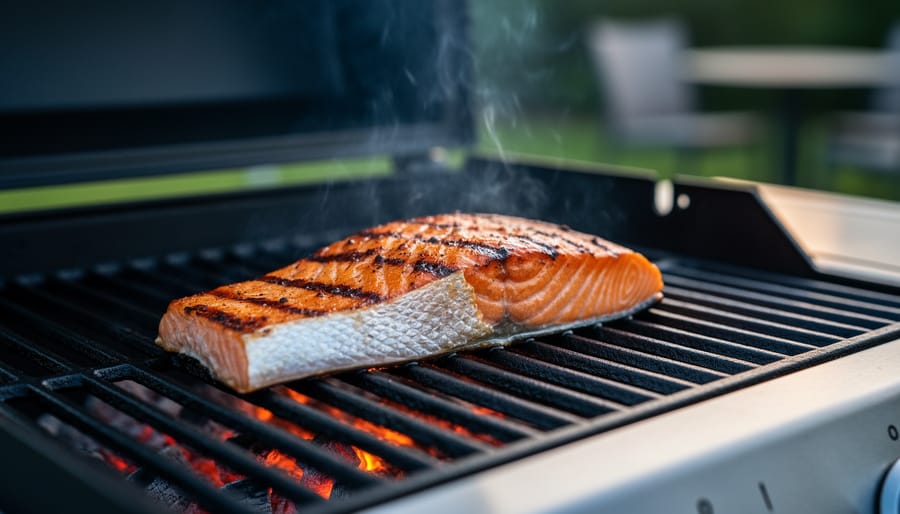
Grilling salmon on your BBQ takes just 12 to 15 minutes and delivers restaurant-quality results when you master three fundamentals: medium-high heat (around 400°F), a clean oiled grate, and knowing when to flip. The technique is straightforward enough for weeknight dinners yet impressive enough for guests, transforming quality fish into a smoky, flaky centerpiece with minimal fuss.
The beauty of BBQ salmon lies in how the direct heat caramelizes the exterior while keeping the inside moist and tender. Unlike pan-searing, grilling adds depth through subtle char and smoke, enhancing the natural richness of the fish without overwhelming it. Whether you’re working with skin-on fillets or cedar planks, the process rewards attention to timing and temperature rather than complicated methods.
For generations, families have gathered around the grill to celebrate quality seafood, and salmon remains the perfect candidate for outdoor cooking. Its firm texture holds up beautifully to high heat, and its natural oils prevent it from drying out when cooked properly. Starting with fresh, responsibly sourced fish makes all the difference in both flavor and sustainability, ensuring your efforts result in a meal worth remembering.
The steps ahead will walk you through everything you need: the right tools, safety considerations, exact timing, and how to tell when your salmon is perfectly cooked.
Why BBQ Salmon Deserves a Spot in Your Recipe Rotation
Grilling salmon transforms a premium fillet into something extraordinary. The high, direct heat caramelizes the surface while infusing a delicate smokiness that you simply can’t replicate indoors. Unlike heavier proteins that demand hours of attention, salmon cooks in ten to fifteen minutes, making it ideal for weeknight dinners or spontaneous weekend gatherings when you want impressive results without the fuss.
The health benefits seal the deal. Salmon ranks among the most nutrient-dense proteins available, loaded with omega-3 fatty acids, vitamin D, and selenium. Grilling preserves these nutrients while allowing excess fat to drip away, and you don’t need butter or heavy sauces to make it taste incredible. A squeeze of lemon and a sprinkle of salt often suffice when the fish itself is fresh and handled properly.
At Two Sea Fish Market, we’ve spent decades sourcing salmon that meets our standards for freshness and sustainability. When you start with quality fish, bright color, firm texture, clean ocean scent, the grill does most of the work for you. Mediocre salmon can turn dry and fishy-tasting; excellent salmon becomes tender, flaky, and naturally flavorful with minimal intervention. That difference matters more on the grill than anywhere else, where there’s nowhere for subpar ingredients to hide. Once you’ve tasted properly grilled fresh salmon, it earns a permanent place in your cooking rotation.
Choosing and Preparing Your Salmon
The salmon you choose sets the stage for a great BBQ experience. At Two Sea Fish Market, we’ve been delivering premium seafood since our founding, and we know that quality salmon makes the difference between a good meal and a memorable one.
Fresh vs. Frozen: Both Work
Fresh salmon offers peak flavor and texture, but don’t overlook frozen. When properly flash-frozen at sea, salmon retains its quality beautifully. If you’re buying frozen, thaw it slowly in the refrigerator overnight, never at room temperature or under hot water. This gradual method preserves moisture and texture.
Selecting Your Cut
Skin-on fillets are your best bet for grilling. The skin acts as a protective barrier against the grill’s heat and helps hold the delicate flesh together. If you prefer skinless, consider using a fish basket or cedar plank to prevent sticking. Salmon steaks work too, though fillets are easier for beginners to handle.
When choosing fresh salmon, look for these quality markers:
- Bright, translucent flesh ranging from deep pink to orange-red
- Firm texture that springs back when gently pressed
- Clean, ocean-fresh smell with no fishy odor
- Moist appearance without dryness or browning at the edges
Prep Work Before Grilling
Pat your salmon completely dry with paper towels. Surface moisture creates steam rather than a nice sear. Cut larger fillets into individual portions, roughly six ounces each, for even cooking. Check for pin bones by running your fingers along the flesh, and remove any you find with tweezers or pliers.
Let the salmon sit at room temperature for 15 minutes before grilling. This ensures the center cooks through without charring the exterior.
Essential Tools and Materials for BBQ Salmon
You don’t need a specialty kitchen to grill salmon beautifully. A few basic tools and the right setup will set you up for success, whether you’re working with a compact balcony grill or a full backyard setup.
Start with your grill itself. Gas grills offer easy temperature control and quick preheating, making them ideal for weeknight cooking. Charcoal grills bring authentic smoky flavor and slightly higher heat, perfect for achieving those gorgeous grill marks. Pellet grills split the difference, delivering wood-fired taste with adjustable settings. Any of these works wonderfully for salmon, choose based on what you already own or prefer.
For tools and accessories, keep it straightforward:
- Wide fish spatula with a thin, flexible edge for sliding under delicate fillets
- Long-handled tongs for adjusting salmon position without piercing the flesh
- Instant-read thermometer to check doneness accurately
- Grill brush for cleaning grates before cooking
- High-heat cooking oil (grapeseed, avocado, or canola) for preventing sticking
- Fish grilling basket (optional but helpful for smaller portions or fragile fillets)
- Cedar planks (optional, for infusing subtle wood flavor)
- Heavy-duty aluminum foil (optional, for indirect heat method or easy cleanup)
For seasonings, start simple. Quality salmon from Two Sea Fish Market shines with just salt, pepper, and a squeeze of lemon. Keep olive oil, fresh herbs, garlic, and your favorite spices on hand for easy flavor variations. You’ll find specific marinade ideas later in this guide, but remember: fresh seafood doesn’t need elaborate preparation to taste spectacular.
Safety and Setup Essentials
Before you fire up the grill, a few simple safety steps will ensure your salmon turns out both delicious and safe to eat. Start by keeping your raw salmon refrigerated until you’re ready to cook, and use a clean cutting board and utensils to avoid cross-contamination with other foods. If you’re marinating, always do it in the refrigerator, not on the counter, and discard any leftover marinade that touched raw fish.
Clean grill grates are just as important for safety as they are for flavor. Heat your grill on high for 10 minutes to burn off residue from previous cookouts, then brush the grates thoroughly with a stiff wire brush. Once clean, use tongs to rub a folded paper towel dipped in vegetable oil across the grates, this creates a nonstick surface that prevents your salmon from tearing when you flip or remove it.
Set up your workspace with everything within arm’s reach: a clean platter for the cooked fish, your thermometer, and a sturdy metal spatula. Keep a spray bottle of water nearby for any flare-ups, and make sure your grill is positioned away from overhanging branches or structures. When you source your salmon from a trusted supplier committed to sustainable practices, you’re not only ensuring quality and freshness, you’re supporting responsible fishing that protects ocean ecosystems for future generations. The safe minimum internal temperature guidelines apply to all fish, so this single checkpoint covers you whether you’re grilling wild-caught or farmed salmon.
Step-by-Step: Grilling Perfect Salmon
Prepping Your Grill
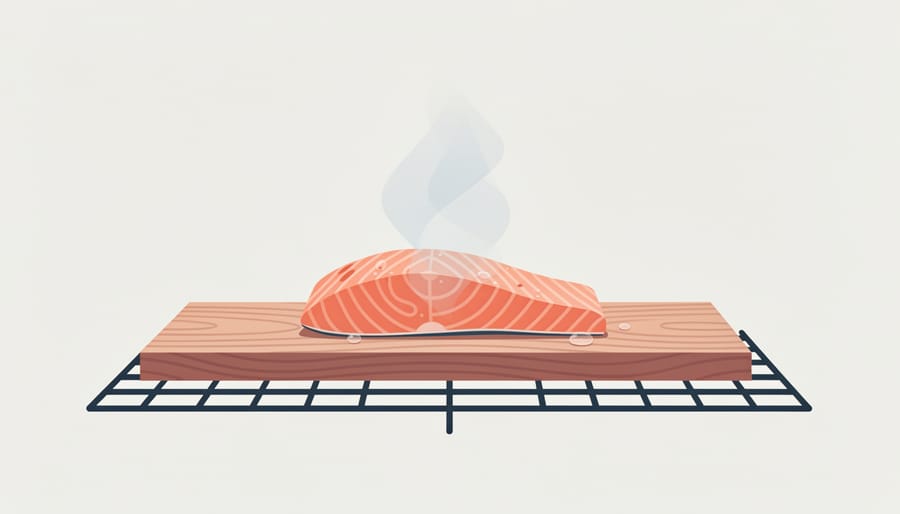
Start by preheating your grill to medium-high heat, around 375-400°F, for at least 10 minutes with the lid closed. This ensures even temperature throughout and helps burn off any residue from previous cooking sessions.
While the grill heats, use a sturdy wire brush to scrub the grates clean. Remove any stuck-on bits or debris that could interfere with your salmon or cause sticking. Once clean, dip a folded paper towel in a neutral oil like canola or grapeseed, grip it with long tongs, and rub it generously across the hot grates. This creates a non-stick surface that helps salmon release cleanly when it’s time to flip or remove it.
A well-prepped grill sets you up for success before the fish even touches the heat.
Grilling the Salmon
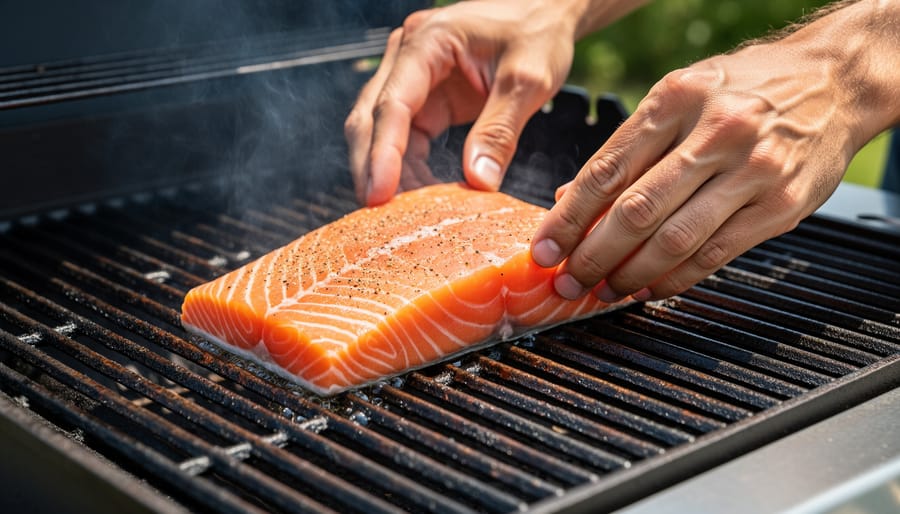
Once your grill is ready, place the salmon skin-side down on the grates at a slight diagonal to the bars. This positioning creates attractive grill marks and helps the fish release more easily. If you’re working with skinless fillets, lay them presentation-side up first.
Close the lid immediately. This creates an oven-like environment that cooks the salmon evenly from all sides, not just the bottom. For a 1-inch thick fillet, grill for 6 to 8 minutes without opening the lid. Thinner pieces (around ¾ inch) need 4 to 6 minutes, while thicker cuts or whole sides may require 10 to 12 minutes.
Resist the urge to peek or fiddle with the fish. The salmon will release naturally from the grates when it’s ready. If you’re grilling skin-on, you typically don’t need to flip it at all. The skin acts as a protective barrier while the closed lid cooks the top. For skinless fillets, a single careful flip halfway through works well.
Watch for visual cues through any grill window or during a quick lid lift near the end. The salmon should turn from translucent pink to opaque, starting from the bottom and moving up. The flesh will begin to flake slightly at the edges, and you might see white albumin (a harmless protein) beading on the surface. When the thickest part feels firm with a slight give when pressed gently with tongs, it’s close to done.
Finishing and Resting
Once your salmon reaches the target temperature, slide a wide, thin spatula carefully under the fillet, starting from one end and working your way beneath the entire piece to keep it intact. Lift gently and transfer to a clean platter. If you’ve cooked skin-on, the skin should release cleanly from the grate; if it sticks, don’t force it, leave it behind rather than tearing the flesh.
Let the salmon rest for three to five minutes before serving. This short pause allows the juices to redistribute through the fish, preventing a dry, flaky mess when you cut into it. The internal temperature will also rise by a couple of degrees during this time, ensuring even doneness without overcooking on the grill.
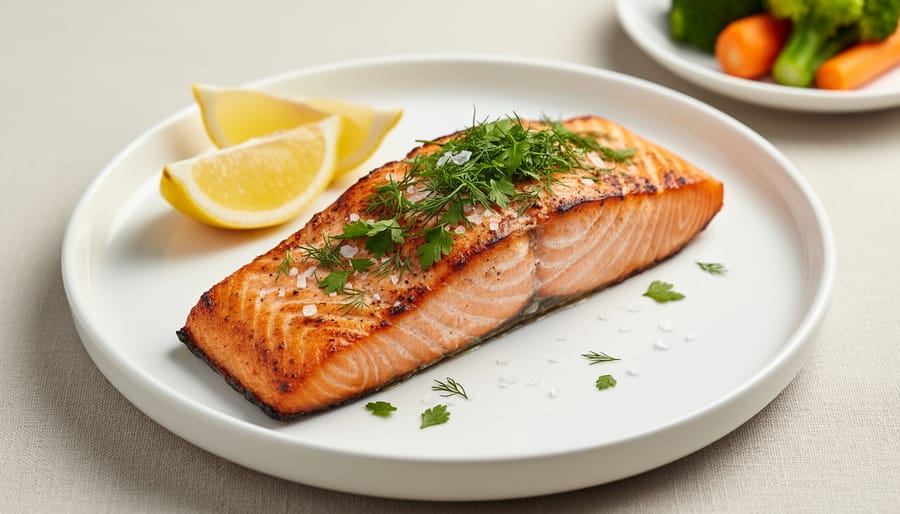
While the salmon rests, finish with a light drizzle of olive oil, a squeeze of fresh lemon, or a sprinkle of flaky sea salt and chopped herbs, whatever complements your marinade or seasoning. These final touches brighten the flavor and add a restaurant-quality polish. Serve immediately while still warm.
How to Tell When Your Salmon Is Perfectly Cooked
Knowing when your salmon is done makes the difference between tender, flaky perfection and dry disappointment. The most reliable method is checking internal temperature: insert an instant-read thermometer into the thickest part, aiming for 125°F if you prefer a slightly translucent center, or 135-140°F for fully cooked salmon. The FDA recommends 145°F, but many chefs stop at 130-135°F for moist, restaurant-quality results.
Beyond temperature, visual cues matter. Properly cooked salmon turns from translucent red or pink to opaque, with color lightening throughout. The flesh should separate into flakes when nudged with a fork, but still hold together on the spatula. If it’s falling apart or looks chalky white, you’ve gone too far.
The biggest mistake is leaving salmon on the grill too long. It continues cooking after you remove it, so pull it off when it’s just shy of your target doneness. A two-minute rest lets carryover heat finish the job without overdoing it. Overcooked salmon turns dry and loses its silky texture, so err on the side of caution, you can always give it another minute on the grill, but you can’t undo dryness.
Simple Marinades and Seasoning Ideas
Great salmon doesn’t need a complicated marinade to shine, just a few quality ingredients that enhance its natural richness without masking it. Here are four easy options you can prepare in minutes with pantry staples.
Classic Lemon-Herb: Combine fresh lemon juice, olive oil, minced garlic, chopped dill or parsley, salt, and black pepper. This bright, clean marinade works beautifully with salmon’s fatty texture and takes just 15 to 30 minutes to infuse. The acidity gently seasons the fish while the herbs add freshness.
Teriyaki Glaze: Whisk together soy sauce, honey or brown sugar, grated ginger, minced garlic, and a splash of rice vinegar. This sweet-savory glaze caramelizes gorgeously on the grill, creating a glossy finish with deep umami notes. Brush it on during the last few minutes of cooking to prevent burning.
Garlic Butter: Melt butter with crushed garlic, a squeeze of lemon, and a pinch of paprika or cayenne for warmth. Brush this over your salmon halfway through grilling and again just before serving. It’s indulgent, simple, and always a crowd-pleaser.
Simple Dry Rub: Mix brown sugar, smoked paprika, garlic powder, black pepper, and sea salt. Pat it onto your salmon 20 minutes before grilling for a slightly sweet, smoky crust that pairs perfectly with the char from the BBQ.
For quick reference, here’s what you need for each:
- Lemon-Herb: lemon juice, olive oil, garlic, fresh dill or parsley, salt, pepper
- Teriyaki Glaze: soy sauce, honey, ginger, garlic, rice vinegar
- Garlic Butter: butter, garlic, lemon, paprika
- Dry Rub: brown sugar, smoked paprika, garlic powder, pepper, sea salt
Whichever option you choose, don’t over-marinate, 20 to 30 minutes is plenty for salmon. Longer than that and the acid can start breaking down the delicate flesh, turning the texture mushy rather than tender.
Common BBQ Salmon Mistakes and How to Avoid Them
Even experienced grillers run into trouble with salmon. The most common mistake is skipping the preheat, grill grates need at least 10-15 minutes at medium-high (around 400°F) to develop a non-stick surface. Cold grates guarantee your fillet will tear apart when you try to flip it.
Sticking happens when the fish isn’t ready to release. If you place salmon on the grill and it clings stubbornly, it’s not done searing yet. Wait another minute or two; properly seared fish naturally releases from the grates. Patience beats forcing it every time.
Overcooking dries out salmon faster than any other error. Pull your fish off the heat at 125-130°F internal temperature; carryover cooking will bring it to a perfect 135°F as it rests. Don’t wait until it reaches 145°F on the grill, by then it’s already past its prime.
Underseasoning is another culprit. Salmon’s rich flavor can handle bold treatment, so don’t be timid with salt, pepper, and aromatics. Season generously at least 15 minutes before grilling to let the flavors penetrate.
Finally, choosing thin tail pieces instead of uniform center-cut fillets leads to uneven cooking. Stick with fillets at least one inch thick for consistent results across the entire piece.
Frequently Asked Questions
Grilling salmon raises plenty of practical questions, especially if you’re new to cooking fish on the barbecue. Here are straightforward answers to the most common concerns we hear from home cooks tackling their first (or fiftieth) BBQ salmon.
Do I need to flip my salmon while grilling?
No, you typically don’t need to flip salmon fillets. Start skin-side down and let it cook through from the bottom up, the skin protects the flesh and makes removal easier. If you’re working with skinless fillets or prefer both sides seared, flip gently once after the first side is well-marked and releases easily from the grates.
Can I grill salmon straight from frozen?
It’s not ideal. Frozen salmon won’t develop the same caramelization and tends to steam rather than grill, plus it’s harder to season properly. For best results, thaw your salmon in the refrigerator overnight before grilling.
Should I remove the skin before grilling?
Keep the skin on. It acts as a protective barrier between the delicate flesh and the hot grates, holds the fillet together during cooking, and makes flipping or removal much easier. You can peel it off after cooking if you prefer not to eat it.
How do I prevent my salmon from falling apart on the grill?
Oil both the grill grates and the salmon itself before cooking, and don’t move the fish until it naturally releases from the grates. Using a fish basket or grilling on a cedar plank eliminates sticking concerns entirely.
What’s the best wood for smoking salmon on the BBQ?
Cedar, alder, and maple work beautifully with salmon’s natural flavor. Cedar planks are classic and easy to use, while alder chips offer a mild, traditional Northwest smoke profile that won’t overpower the fish.
These techniques work whether you’re grilling a single fillet for dinner or preparing salmon for a crowd. The key is treating your fish gently and trusting the process, quality salmon from Two Sea Fish Market is resilient enough to handle the heat when you follow these basics.
Grilling salmon doesn’t have to be intimidating. With fresh, high-quality fish and a few simple techniques, you’ll turn out beautifully cooked salmon that impresses every time. The difference truly starts with what you put on the grill, premium salmon from Two Sea Fish Market brings out flavors no amount of seasoning can fake.
Ready to fire up your BBQ? Browse our selection of fresh, sustainably sourced salmon and discover more approachable recipes in our Free and Easy Seafood collection. Whether it’s your first attempt or your fiftieth, quality ingredients and a bit of confidence are all you need for a memorable meal. Order your salmon today and make your next cookout something special.