
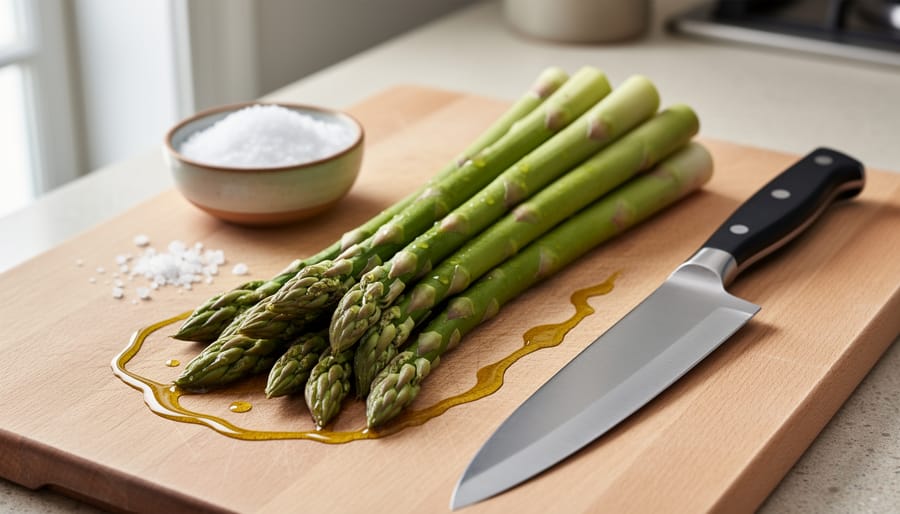
Preparing asparagus for cooking takes just five minutes and involves four essential steps: wash the spears thoroughly under cold water, snap or trim the woody ends, season with oil and salt, and choose your cooking method. The process is simple, but getting it right transforms these slender stalks from fibrous to fork-tender, unlocking their sweet, grassy flavor that pairs beautifully with everything from grilled salmon to pan-seared scallops.
The difference between mediocre and memorable asparagus comes down to preparation. Home cooks often skip the washing step or cut the ends arbitrarily, leaving grit or tough, chewy bases that no amount of cooking can fix. At Two Sea Fish Market, we’ve watched culinary enthusiasts discover that the same attention they give to selecting premium seafood applies to seasonal vegetables. Fresh asparagus deserves the same respect you’d show a pristine fillet.
Thickness matters more than most recipes admit. Pencil-thin spears need 30 seconds to one minute of blanching, while thick stalks require one to two minutes. Roasting at 425°F takes about 12 minutes regardless of thickness, but thinner spears crisp faster and can burn if you’re not watching. Understanding these timing variations means you’ll never serve mushy or undercooked asparagus again, creating the perfect canvas for spring menus alongside your favorite seafood preparations.
What You’ll Need to Prepare Asparagus
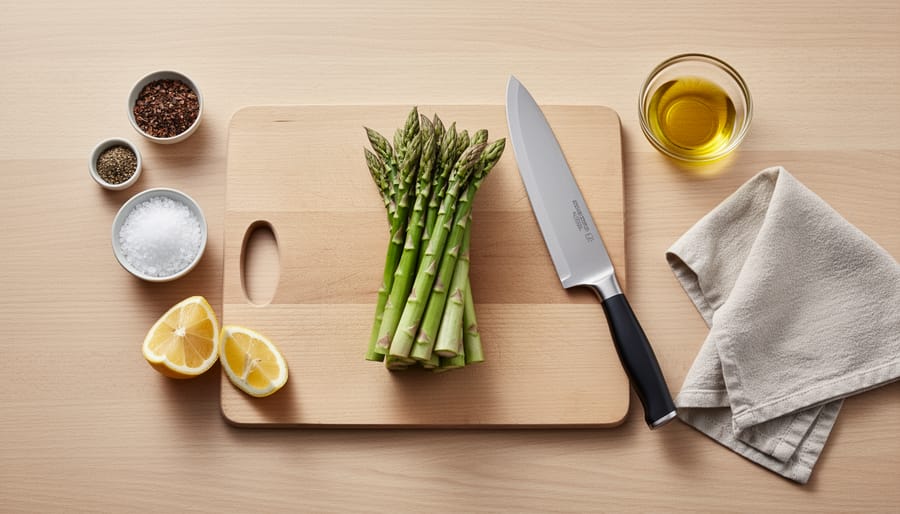
You probably already own everything you need to prepare asparagus. The beauty of this vegetable is its simplicity, no specialized equipment or exotic ingredients required. A few basic kitchen tools and pantry staples will have you ready to transform fresh asparagus spears into a delicious side dish.
Here’s what to gather before you begin:
- Cutting board for a stable work surface
- Chef’s knife (or simply use your hands to snap the ends)
- Colander for washing and draining
- Large pot if you plan to blanch
- Baking sheet for roasting at 425°F
- Bowl for tossing spears with oil and seasonings
- Olive oil to coat the asparagus
- Salt and freshly ground black pepper
- Optional seasonings like garlic powder, lemon zest, or Parmesan
The knife is technically optional since asparagus naturally snaps at the point where tender meets woody, but many cooks prefer the control of a clean cut. If you’re roasting or grilling, you’ll need enough olive oil to lightly coat each spear, usually two to three tablespoons does the job for a pound of asparagus. For blanching, fill your pot with enough water to cover the spears completely.
Most home cooks find they can pull these items from their existing kitchen setup without a special trip to the store. The focus stays where it belongs: on the asparagus itself and the straightforward techniques that bring out its fresh, grassy sweetness.
Important Tips Before You Start
Before you begin preparing asparagus, a few simple precautions ensure both safety and quality. Start by washing your spears under cold running water to remove any dirt, sand, or grit that collects in the tips and along the stalks. This step is non-negotiable, asparagus grows in sandy soil, and unwashed spears can introduce an unpleasant grittiness to your finished dish.
Once your asparagus is clean and dry, keep an eye on cook times. Overcooking turns crisp-tender spears into a mushy, grey disappointment. Whether you’re blanching for 30 seconds or roasting at 425°F for 12 minutes, stay attentive and test for doneness a minute before the timer sounds. Handle hot pots, baking sheets, and grill grates with proper oven mitts, especially when working with high-heat methods.
When shopping for asparagus, choose locally grown spears during peak season when possible. Supporting sustainable farming practices aligns with Two Sea Fish Market’s longstanding commitment to quality and responsible sourcing, values we’ve upheld since 1950.
Step-by-Step Asparagus Preparation
Step 1: Wash Your Asparagus Thoroughly
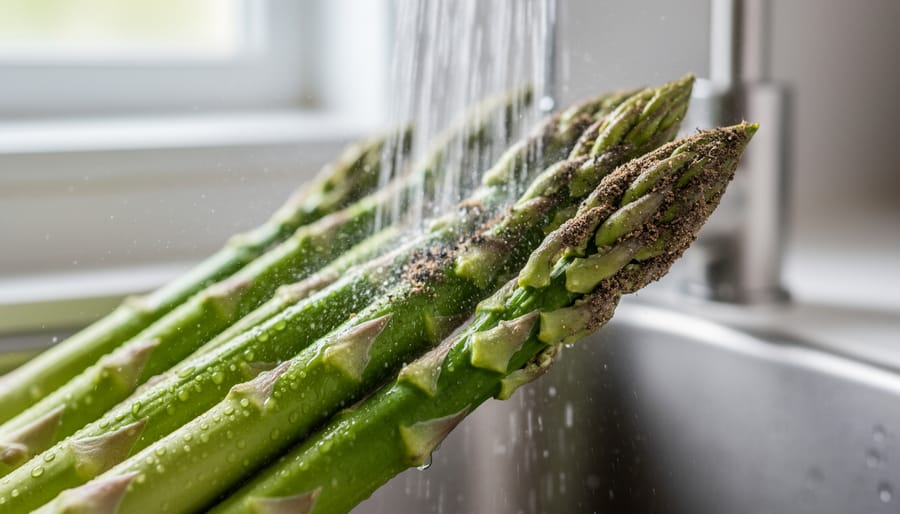
Start by holding your asparagus bunch under cold running water, rotating it gently to reach all sides of the spears. Pay extra attention to the tips, where tightly clustered florets tend to trap dirt and sand. Let the water flow through these delicate tops for a few seconds, using your fingers to lightly brush away any stubborn grit without damaging the tender buds.
Once rinsed, shake off the excess water and lay the spears on a clean kitchen towel or several layers of paper towels. Pat them dry thoroughly, turning each spear to remove moisture from all surfaces. This step matters more than most home cooks realize. Wet asparagus won’t roast properly at 425°F, the moisture creates steam instead of the light caramelization you want. If you’re planning to blanch your spears, drying isn’t quite as critical, but it still prevents water from diluting your cooking liquid unnecessarily.
Take your time here. Properly dried asparagus means better browning, crisper results, and safer handling when hot oil is involved.
Step 2: Trim the Woody Ends
The bottom two inches of asparagus spears turn fibrous and woody as they mature, making them unpleasant to chew no matter how you cook them. Removing these tough ends ensures every bite is tender and enjoyable.
The snap method is the most reliable way to find where the tender portion meets the woody base. Hold a single spear near each end with both hands. Gently bend the stalk until it naturally breaks, it’ll snap exactly where the texture changes from crisp to fibrous. This breaking point varies by spear thickness and freshness, which is why snapping works better than measuring and cutting at a predetermined length.
Once you’ve snapped your first spear, you can use it as a guide. Line up the remaining spears and cut them all at the same point with a chef’s knife, which saves time if you’re preparing a large bunch. Alternatively, snap each one individually for precision.
Don’t worry about wasting asparagus. The woody ends contain little flavor and won’t soften during cooking. Some cooks save them for vegetable stock, but the tender portions you’ve preserved will deliver the sweet, grassy taste that makes asparagus a perfect companion to grilled fish or seared scallops.
Step 3: Season Your Asparagus
Toss your clean, trimmed asparagus spears in a large bowl with about two tablespoons of olive oil per pound. The goal is to coat each spear evenly without drowning them, you want just enough oil to carry the seasonings and promote caramelization during roasting or grilling. Use your hands or tongs to turn the spears gently, making sure the tips and stems both get coverage.
Sprinkle salt and freshly ground black pepper over the asparagus as you toss. A half teaspoon of salt and a quarter teaspoon of pepper per pound is a good starting point, but adjust to your taste. The seasoning should cling to the oil-coated spears without clumping.
Beyond the basics, consider adding minced garlic, lemon zest, or a pinch of red pepper flakes for depth. These additions pair beautifully with seafood, especially if you’re serving asparagus alongside grilled clams or seared fish. A light dusting of grated Parmesan after cooking can also bridge the flavors between your vegetables and ocean catch.
Once seasoned, your asparagus is ready to hit the heat. For roasting, spread the spears in a single layer on your prepared baking sheet. For grilling, they go straight onto the grates.
Step 4: Prep for Your Chosen Cooking Method
Your final prep step depends entirely on how you plan to cook your asparagus. Each method requires a slightly different setup to ensure even cooking and the best texture.
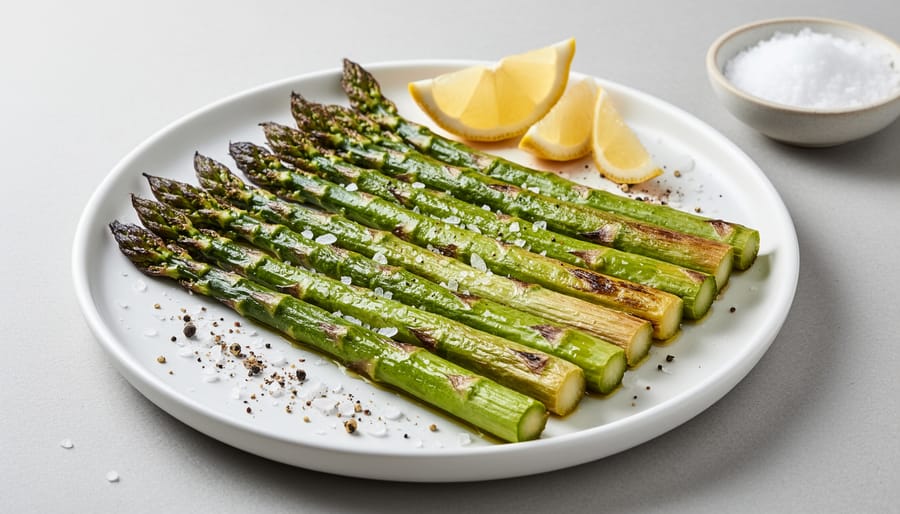
For roasting, preheat your oven to 425°F while you arrange the seasoned asparagus spears in a single layer on a baking sheet. Don’t overlap them, crowding traps steam and prevents the crispy, caramelized edges that make roasted asparagus so appealing. Once your oven reaches temperature, slide the pan onto the middle rack and roast for 12 minutes, checking toward the end if your spears are particularly thick or thin.
If you’re blanching, fill a large pot with water, add a generous pinch of salt, and bring it to a rolling boil. Have a bowl of ice water ready nearby. Drop your trimmed spears into the boiling water: thin asparagus needs only 30 seconds to 1 minute, while thicker spears should stay in for 1 to 2 minutes. Pull them out when they turn bright green and feel crisp-tender, then plunge them immediately into the ice bath to stop the cooking. This technique works beautifully when you want to prep asparagus ahead or serve it chilled in salads.
For grilling, make sure your grill grates are clean and preheated to medium-high. Lay the oiled, seasoned spears perpendicular to the grates so they don’t slip through. Grilling adds smoky char that pairs especially well with seafood, try this method when you’re already grilling salmon for an effortless side dish that comes together on the same heat source.
Thickness Matters: Adjusting Your Prep
Asparagus thickness directly determines how long you’ll cook it and which method works best. Thin spears, roughly pencil-width or smaller, cook fast and work beautifully for quick blanching or delicate preparations. Thick spears, about half an inch in diameter or more, need extra time to soften their denser interiors without losing that crisp-tender bite.
When blanching, thin asparagus only needs 30 seconds to 1 minute in salted boiling water. Drop them in, count to 45, and they’re usually ready. Thick spears require 1 to 2 minutes to reach the same level of doneness. Undercook thick asparagus and you’ll bite into a woody texture; overcook thin spears and they’ll go limp.
For roasting at 425°F, thin spears finish closer to 8 minutes, while thick ones benefit from the full 12-minute window. Grilling follows the same logic, adjust your timing based on diameter. Test a spear with a fork about halfway through; it should pierce easily but still offer slight resistance.
If you’re working with a bunch of mixed thicknesses, sort them before cooking. Group similar sizes together so everything finishes at the same time. That simple step prevents some spears from turning mushy while others stay undercooked, giving you consistent results that pair perfectly with any seafood dish.
How to Tell When Asparagus Is Properly Prepped
Before you move on to cooking, take a moment to check your work. Properly prepped asparagus should look clean and uniform, with no visible dirt clinging to the tips or stalks. The spears should feel dry to the touch, moisture left on the surface can cause oil to splatter when roasting and will dilute your seasoning. Check that each spear is trimmed evenly at the bottom, with all the woody, pale ends removed so you’re left with the tender portion only.
If you’re roasting or grilling, the spears should have a light, even coating of olive oil and a visible dusting of salt and pepper. They shouldn’t be swimming in oil or clumped together, each spear needs space to caramelize properly. For blanching, your pot of salted water should be at a rolling boil before the asparagus goes in, and you’ll know it’s done when the color shifts to bright, vivid green and a fork slides through with slight resistance, not mushiness.
Once your asparagus is prepped to this standard, you’re ready to pair it with your main dish. Whether you’re serving it alongside grilled salmon or learning how to cook halibut properly prepared asparagus elevates the entire plate with its fresh, clean flavor and crisp-tender bite.
Frequently Asked Questions
Prepping asparagus raises practical questions about technique and storage, especially when you’re planning meals ahead or working with different spear varieties. Here are answers to the most common asparagus preparation questions.
Do you need to peel asparagus?
No, peeling isn’t necessary for most asparagus. Proper trimming of the woody ends removes the tough portion, and the outer skin of fresh spears is tender enough to eat once cooked. Peeling is only worthwhile for exceptionally thick stalks when you want uniform texture throughout.
Can you prepare asparagus ahead of time?
Yes, you can wash and trim asparagus up to two days before cooking. Store the prepped spears upright in a container with about an inch of water in the refrigerator, covering loosely with a plastic bag. Pat them dry thoroughly before roasting or grilling.
What’s the best way to keep leftover prepped asparagus fresh?
Wrap trimmed, unwashed asparagus in a damp paper towel and place it in a perforated plastic bag in your refrigerator’s crisper drawer. This method maintains moisture without creating sogginess and keeps spears fresh for three to four days.
How does asparagus pair with seafood dishes?
Asparagus complements seafood beautifully because both share delicate flavors that don’t overpower each other. Roasted or grilled asparagus works especially well alongside salmon, halibut, scallops, and shrimp, the natural sweetness of properly prepared asparagus enhances the clean taste of quality seafood without competing for attention on the plate.
These preparation fundamentals give you flexibility in the kitchen. Whether you’re snapping ends the night before a dinner party or deciding how to store extra spears, understanding these basics means asparagus fits seamlessly into your cooking routine. The vegetable’s forgiving nature makes it an ideal companion for the premium seafood selections that demand careful timing and attention.
With these four straightforward steps, washing, trimming, seasoning, and cooking, you’ve mastered the foundation of asparagus preparation. These techniques transform fresh spears into tender, flavorful sides that hold their own alongside any dish. When you pair properly prepared asparagus with premium seafood, you create meals that feel refined without the fuss.
At Two Sea Fish Market, we’ve spent over 75 years helping customers bring exceptional ingredients to the table. Since 1950, our commitment to quality has meant sourcing the finest seafood and guiding home cooks toward combinations that truly shine. Asparagus, with its clean flavor and crisp-tender bite, complements everything from grilled salmon to pan-seared scallops.
Try these prep methods with your next seafood dinner. Browse our easy seafood recipes for inspiration on pairing asparagus with fish, shellfish, and everything in between. Whether you’re roasting spears to serve with halibut or blanching them for a quick weeknight plate, confidence in preparation makes all the difference. You’ve got the technique now, go create something delicious.