
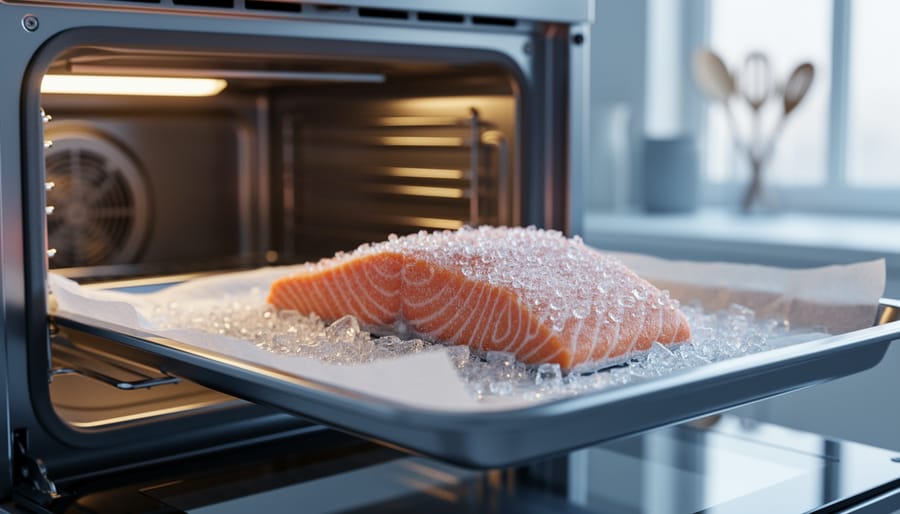
Forget everything you thought you knew about defrosting salmon overnight. Place your frozen fillet directly into a preheated 425°F oven, add 5 minutes to your usual cook time, and you’ll have perfectly flaky, restaurant-quality fish on the table in under 20 minutes. At Two Sea Fish Market, we’ve spent over seven decades perfecting our flash-freezing process, and we’re here to tell you that cooking from frozen isn’t just convenient, it often produces better results than thawed fish.
The secret lies in how premium salmon is handled at sea. Our vessels freeze wild-caught salmon within hours of harvest, locking in moisture and flavor at their absolute peak. When you cook from frozen, that protective ice layer creates gentle steam that bastes the fish from within, preventing the dreaded dry, chalky texture that comes from overcooking. Thawed salmon, by contrast, loses precious moisture during defrosting and sits exposed to air and bacteria for hours before it hits your pan.
Here’s what matters most: frozen salmon cooks evenly from edge to center when you use the right technique. Whether you’re pan-searing, roasting, or poaching, the key is matching your method to your timeline. A busy weeknight calls for high-heat roasting. Weekend entertaining? Try the gentler approach of oven-steaming in parchment. We’ll walk you through each method with precise temperatures and timing, plus the troubleshooting tips we’ve learned from working with commercial kitchens and home cooks alike.
This isn’t about settling for second-best. This is about making sustainably harvested, peak-quality salmon work with your real life.
The Truth About Frozen Salmon: Quality That Waits for You
The salmon sitting in your grocery store’s “fresh” case might be a week old, held just above freezing, slowly losing moisture and flavor. Meanwhile, the fillet flash-frozen at sea within hours of harvest sits in your freezer, locked at peak freshness, waiting for dinner.
Two Sea Fish Market has understood this truth since 1950. Our flash-freezing process drops salmon to subzero temperatures in minutes, not hours, forming tiny ice crystals that preserve cell structure instead of rupturing it. That’s the difference between salmon that cooks up flaky and moist versus dry and mealy. When fish comes off the boat, we move fast, because those first few hours determine everything about the quality you’ll taste months later.
The myth that “fresh equals better” ignores a simple reality: most seafood travels thousands of miles before reaching your plate. What’s labeled fresh has often spent days in transport, sitting on ice that’s been drained and replaced multiple times. Properly frozen salmon, by contrast, hits pause on that quality clock. Our 70-year seafood legacy taught us that preservation isn’t about compromise, it’s about capturing perfection and holding it there.
The freezer doesn’t diminish quality. Poor freezing techniques do. Commercial flash-freezing at negative 40 degrees creates microscopic ice crystals that leave texture intact. Home freezers, running at zero degrees, form larger crystals that can damage fish over time. That’s why sourcing matters: salmon frozen properly at the source beats anything you’ll freeze at home, and often beats the “fresh” fish that’s been aging in transit for a week.
Why Cooking from Frozen Actually Works Better
Here’s what most home cooks get wrong: they think frozen fish is playing catch-up with fresh. The science tells a different story.
When you cook salmon from frozen, you’re working with a built-in safety mechanism. The frozen core acts as a natural temperature buffer. As the exterior heats and begins to cook, the still-frozen interior slowly releases cold, creating a gentle, even temperature gradient throughout the fillet. This gradual rise is exactly what prevents the dry, chalky texture that happens when proteins cook too fast.
Thawed salmon, by contrast, starts at refrigerator temperature throughout. Apply high heat and the entire fillet races toward doneness at the same rate. The thin tail overcooks while you wait for the thick center to finish. With frozen salmon, the exterior reaches perfect doneness just as the center thaws and cooks through, creating an edge-to-edge texture that’s remarkably uniform.
The moisture advantage is equally real. Salmon contains intramuscular ice crystals when frozen. As these melt during cooking, they release moisture from within the flesh itself, basting the fish internally. Thawed salmon has already shed this moisture during defrosting, often leaving a puddle in your refrigerator and drier flesh in your pan.
Safety concerns? They’re unfounded. It’s completely safe to cook from frozen and the FDA’s 145°F internal temperature guideline applies the same way whether you start frozen or thawed. The exterior surfaces reach sterilizing temperatures quickly while the center cooks through. There’s no gray zone where bacteria thrive.
The one requirement is patience. Frozen salmon needs 23 to 25 minutes in a hot oven, not the 12 to 15 minutes you’d give a thawed fillet. But that extra time isn’t wasted. It’s working in your favor, creating the controlled temperature climb that delivers restaurant-quality results from a home kitchen.
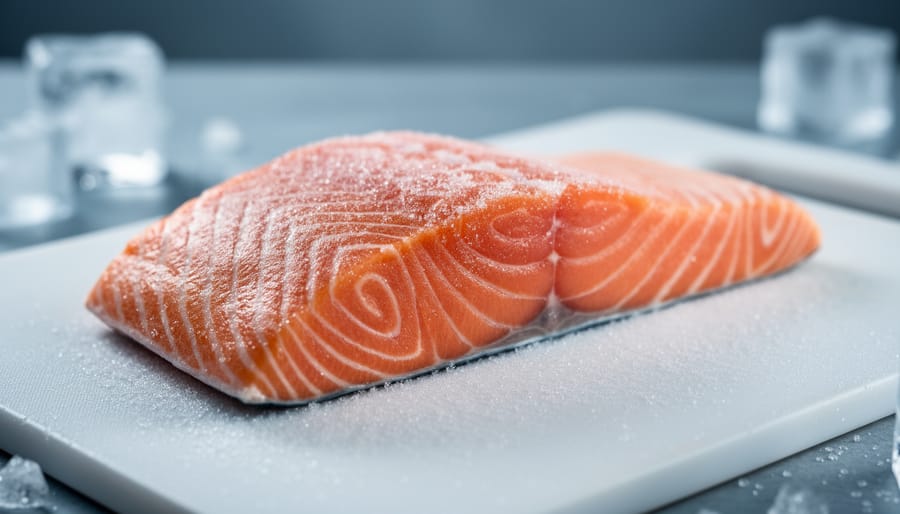
The Essential Method: Oven-Baked Frozen Salmon
The oven method remains the most reliable way to cook salmon from frozen because it delivers even, gentle heat that works with the ice-locked fillet rather than against it. You won’t need to plan ahead, and you won’t sacrifice quality for convenience.
Here’s how to master this foundational technique:
- Preheat your oven to 425°F. This temperature is hot enough to create a good surface texture while the frozen center thaws and cooks gradually.
- Line a baking sheet with aluminum foil for easy cleanup, then lightly oil the foil or use parchment paper on top to prevent sticking.
- Remove your salmon fillets from their packaging and rinse quickly under cold water to eliminate any ice crystals. Pat the surface dry with paper towels.
- Place fillets skin-side down on the prepared sheet, leaving space between each piece for heat circulation.
- Season generously. Because the surface is frozen, you’ll want to use a sauce or butter-based mixture rather than dry spices alone. A combination of melted butter, minced garlic, lemon juice, and herbs works beautifully. Brush or spoon it over the top and sides.
- Tent the fillets loosely with aluminum foil to trap moisture during the initial cooking phase. This prevents the exterior from drying out before the center thaws.
- Bake for 23 to 25 minutes depending on thickness. A standard one-inch fillet typically needs the full 25 minutes.
- Remove the foil tent for the final 3 to 5 minutes if you want a slightly caramelized top.
Temperature is where home cooks often hesitate. The FDA recommends 145°F as the safe minimum, which produces fully opaque, flaky salmon. However, many professional chefs pull salmon at 125°F for a medium doneness with a translucent center and silkier texture. If you’re cooking for guests with varying preferences or immune concerns, stick with 145°F. For your own weeknight dinner, try 130°F to 135°F and see what you prefer.
Use an instant-read thermometer inserted into the thickest part of the fillet. The fish will continue cooking for a minute or two after you remove it from the oven, so account for that carryover.
The beauty of this method lies in its forgiveness. That frozen core acts as a buffer, making it harder to overcook compared to starting with a thawed fillet that can go from perfect to dry in two minutes.
Beyond the Basics: Five More Ways to Cook Frozen Salmon
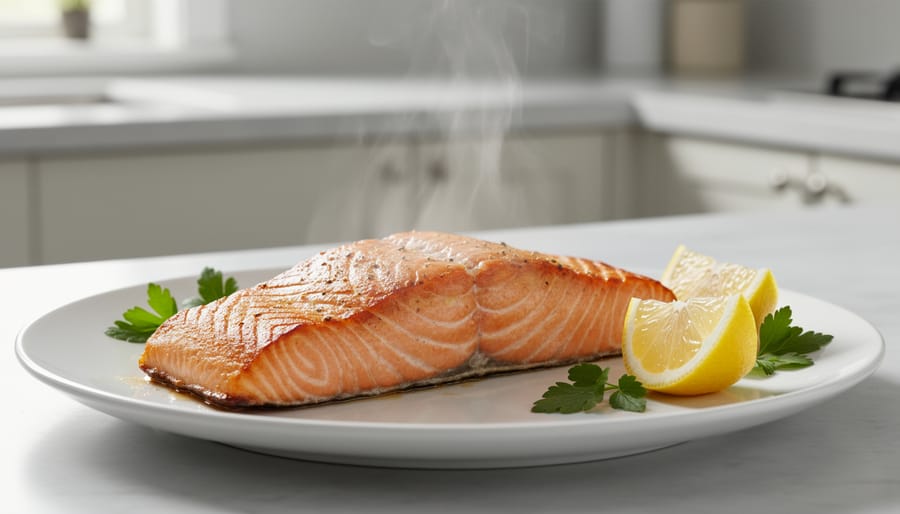
Pan-Searing: When You Want a Crispy Crust
Start with a smoking-hot cast iron or stainless steel pan and enough high-smoke-point oil to coat the surface, grapeseed, avocado, or refined canola work best. Place your frozen fillet skin-side down (if it has skin) and resist the urge to move it for the first 4-5 minutes while the bottom develops a golden crust. The frozen center acts as a buffer against overcooking while the exterior caramelizes. Flip once when you can slide a spatula underneath without resistance, then sear the flesh side for another 3-4 minutes. If your fillet is particularly thick, finish it in a 400°F oven for 5-7 minutes until it reaches 125°F to 145°F internally. The contrast between crispy exterior and moist interior rivals anything you’d get from thawed fish.
Air Fryer Method: The Quick Weeknight Solution
Air fryers excel at cooking frozen salmon for one or two servings, delivering results in 12 to 14 minutes. Set your air fryer to 390°F and place the frozen fillet skin-side down in the basket. No need to preheat. The circulating hot air creates an evenly cooked interior with slightly crisped edges, a texture many weeknight cooks prefer over oven methods.
Brush the frozen surface with olive oil or melted butter, then season. Halfway through cooking, open the basket and add a squeeze of lemon or a pat of herb butter. Check doneness at 12 minutes with an instant-read thermometer. The compact cooking chamber means less kitchen heat and faster cleanup than turning on your oven, making this the go-to method when you’re cooking for yourself after a long day.
Gentle Poaching: For Meal Prep and Salads
Poaching frozen salmon in a barely simmering liquid creates remarkably tender results without the firm crust of other methods. Fill a deep skillet with enough water or broth to submerge the fillet, add aromatics like lemon slices and fresh dill, then bring the liquid to 160-170°F. Slide in your frozen salmon and maintain that gentle simmer for 15-18 minutes. The low, steady heat cooks the fish evenly while keeping it moist and flaky. Once cooled, poached salmon breaks apart beautifully for grain bowls, Niçoise salads, or pasta dishes. The method works especially well for meal prep since you can poach several fillets at once and refrigerate them for the week ahead. Skip heavy sauces here, the delicate texture shines with just olive oil and herbs.
Grilling Frozen Salmon: The Advanced Technique
Grilling frozen salmon demands more attention than indoor methods, but it delivers unmatched smoky flavor. The main challenge is uneven heat distribution, grill grates create hot spots that can burn the exterior while the center stays icy. Start with a two-zone fire: high direct heat on one side, cooler indirect heat on the other. Place frozen fillets skin-side down on the cooler zone first, close the lid, and let them thaw partially for about 8 minutes. This prevents the outside from charring before the inside reaches temperature. Once the surface softens, move fillets to direct heat for 3-4 minutes to develop char marks, then return to indirect heat until they hit 145°F internally. Oil the grill grates heavily and resist the urge to flip multiple times, frozen fish sticks more than thawed. A cedar plank can solve the sticking problem while adding flavor, though it extends cooking time by 5-7 minutes.
Seasoning and Sauce Strategies for Frozen Fillets
The frozen surface presents a puzzle: you can’t press a dry rub into rock-solid fish, and delicate herbs slide right off. The solution is to work with moisture, not against it. As frozen salmon heats, it releases water that becomes your flavor vehicle.
Start with fat-based sauces that cling and penetrate. A garlic butter sauce works beautifully because melted butter carries seasonings into every crevice as the fillet thaws and cooks simultaneously. Melt butter with minced garlic, lemon zest, and fresh dill, then spoon it generously over the frozen fillet before cooking. The butter solidifies on contact, creating a flavor-packed coating that melts into the fish.
Oil-based marinades require a different approach. Mix olive oil with herbs, citrus, and spices, then brush it onto the frozen surface. The oil won’t soak in immediately, but it forms a seasoned barrier that flavors the exterior while preventing moisture loss. Two Sea Fish Market’s test kitchen favors a Mediterranean blend: olive oil, oregano, garlic, and lemon for wild-caught sockeye.
| Sauce Type | Best Method | Flavor Profile |
|---|---|---|
| Miso-Ginger Glaze | Oven (foil-wrapped) | Sweet, umami, slight heat |
| Lemon-Dill Butter | Pan-searing | Bright, herbaceous, rich |
| Maple-Soy | Air fryer | Sweet-savory, caramelized |
| Herb Oil (rosemary, thyme) | Poaching | Subtle, aromatic, clean |
For dry rubs, timing matters. Apply coarse salt and cracked pepper directly to the frozen surface, where they’ll stick to the frost. As the fish thaws in the oven’s heat, the seasonings dissolve and migrate inward. Paprika, cumin, and brown sugar work the same way, creating a crust that intensifies during cooking.
The key is generous application. Frozen fillets need more seasoning than thawed fish because some flavor washes away with the released moisture. Double what you’d normally use, and reapply halfway through cooking if using the oven method.
What Makes Two Sea Fish Market Salmon Different
Not all frozen salmon starts equal. When you buy from Two Sea Fish Market, you’re getting fish that was handled with cooking from frozen in mind, a distinction that matters the moment you unwrap the package.
The market’s standards trace back to 1950, when founder relationships with Pacific Northwest fishermen established protocols that still govern today’s operation. Salmon arrives at processing facilities within hours of catch, not days. The flash-freeze happens at peak freshness, typically within 24 hours of harvest, which locks in the firm texture and clean flavor that holds up through frozen cooking methods.
You’ll find both wild-caught Alaskan sockeye and responsibly farm-raised Atlantic salmon in the inventory. The wild options come from fisheries certified by the Marine Stewardship Council, while farmed selections meet Best Aquaculture Practices standards. This traceability isn’t marketing fluff, each fillet connects to specific harvest dates and locations, information the market maintains through direct buyer relationships rather than commodity distributors.
The freezing process itself uses blast chillers that drop temperature rapidly, forming smaller ice crystals than home freezers produce. Smaller crystals mean less cellular damage, which translates directly to better moisture retention when you cook from frozen. The fillets go into vacuum-sealed packaging that prevents freezer burn for up to six months, though most customers report using them within eight weeks.
This infrastructure explains why the market’s salmon performs reliably in the oven methods described earlier. You’re not compensating for questionable handling, you’re working with a product designed for exactly this cooking approach.
Common Mistakes (And How to Avoid Them)
Most frozen-to-table failures trace back to a handful of fixable missteps. Here’s what goes wrong and exactly how to correct course.
The most frequent error is cranking the heat too high in an attempt to speed things up. When you blast frozen salmon at 450°F or sear it over maximum stovetop heat, the exterior cooks through before the center thaws, leaving you with an overcooked crust and a frozen middle. Instead, stick with 425°F for oven methods and medium-high heat for stovetop, giving the fillet time to warm through evenly. If you’re dealing with particularly thick cuts, dropping to 400°F adds insurance against the dreaded raw-core problem.
- White Albumin Oozing
- Lower your cooking temperature and don’t exceed 145°F internal temperature. This harmless protein coagulates and pushes out when salmon cooks too fast or too hot.
- Watery Texture and Pooling Liquid
- Pat away surface moisture after 10 minutes of cooking, and avoid covering tightly with foil for the entire cook time. Ice crystals release water as they melt, which needs to evaporate.
- Underseasoned, Bland Results
- Apply seasoning generously since frozen surfaces won’t absorb flavors initially. Add a second layer of salt and herbs halfway through cooking once the surface thaws.
- Dry, Overcooked Fish
- Pull salmon at 125°F for medium doneness if you prefer moist texture. The FDA’s 145°F guideline ensures safety but yields firmer results that many find too dry.
Uneven thickness causes uneven doneness. If your fillet tapers dramatically at one end, fold the thin tail under itself before cooking or check that section earlier with your thermometer. Commercial portions from Two Sea Fish Market typically come in uniform cuts that eliminate this variable, but if you’re working with a whole side, account for thickness differences.
The final pitfall is rushing straight from freezer to heat without rinsing. A quick cold-water rinse removes any surface ice crystals and frost, which prevents excess moisture from pooling around the fillet during cooking. Shake off the water but don’t pat dry, you want the surface wet enough for seasonings to stick initially.
Making It a Meal: Complete Dinner Ideas
Your frozen salmon hits 145°F at the same time russet potatoes finish roasting or asparagus turns tender. Build complete dinners by matching cook times instead of juggling multiple dishes.
For a 23-minute oven bake, toss Brussels sprouts with olive oil and place them on a separate sheet pan when the salmon goes in. Fingerling potatoes halved lengthwise need the same window. Green beans require only 15 minutes, so add them midway through. You’re plating a complete meal from one oven cycle.
Mediterranean plates work beautifully: roasted cherry tomatoes, Kalamata olives, and couscous (which steeps off-heat during the final five minutes). Asian-inspired dinners pair salmon with stir-fried snap peas and jasmine rice started before you preheat. For something heartier, roast sweet potato wedges alongside your fillet and toss arugula with lemon vinaigrette while everything rests.
Batch cooking transforms Tuesday’s technique into Thursday’s lunch. Cook three or four frozen fillets at once using the same oven method, varying sauces so you don’t eat identical meals. One with miso-ginger, another with lemon-dill, a third with harissa butter. Refrigerate in separate containers with different grain bases. Cold poached salmon from frozen works particularly well here since it’s meant for salads and bowls anyway.
The real efficiency comes from eliminating the thaw step entirely. Pull frozen fillets as needed, match your sides to the timer, and dinner happens in under thirty minutes from freezer to fork.
Cooking salmon from frozen isn’t just a time-saver, it’s a technique that can produce genuinely superior results when you start with quality fish. The gradual temperature rise protects moisture, the science works in your favor, and you’ve eliminated the thawing step that causes most weeknight dinner stress.
Two Sea Fish Market has built its reputation since 1950 on making premium seafood accessible, not complicated. Our flash-frozen salmon fillets arrive at your door ready for the oven, skillet, or air fryer without advance planning. You don’t need to remember to thaw, you don’t sacrifice quality, and you can explore easy salmon recipes with confidence knowing your protein will cook beautifully straight from the freezer.
The next time you reach for frozen salmon, skip the guilt. You’re not settling, you’re cooking smarter. Browse our online selection to find wild-caught and sustainably farmed options delivered nationwide, all frozen at peak freshness and ready when you are.